


Why adaptive coaching platforms such as QBod are replacing standardized fitness apps.
Your sleep tracker says you had a rough night. Your workout app still serves up the same high-intensity session. Your nutrition app has no idea how hard you trained — or that you barely slept afterward.
Each app may be doing its assigned job. But you are still responsible for putting the information together and deciding what to do next.
That disconnect has become a familiar part of managing health and fitness. People can track food, workouts, steps, heart rate, sleep and recovery across a growing collection of apps and wearable devices. What those tools do not always provide is a clear picture of how the information works together.
Table of Contents
More tracking, more app fatigue
Nearly half of U.S. adults own a fitness tracker or smartwatch, according to the American College of Sports Medicine’s 2026 fitness trends report. The organization ranked wearable technology as the year’s top fitness trend and mobile exercise apps fourth. It also reported that more than 345 million people used fitness apps in 2024, generating more than 850 million downloads.
A 2026 survey conducted by Talker Research for MD Live found that 2,000 insured U.S. adults ages 18 to 64 regularly used six health-related apps on average. More than half said there were too many to manage, and 45% reported feeling burned out at least once a week from keeping up with them.
More than a quarter said their top priority was having their tools in one place, while a similar share wanted the apps to sync and share data.
Fitness data works better together
Sleep, exercise and nutrition are often logged separately, but they are closely connected. Research reviews have linked sleep loss with declines in aspects of exercise performance and recovery. Sports nutrition research has found that energy intake, macronutrients and their timing can affect recovery, tissue repair and training adaptation.
That does not mean one poor night should cancel a workout or one meal should rewrite a plan, said Michele Balco, founder and CEO of AI-powered coaching platform QBod, adding that instead, it means a useful recommendation depends on more than one number.
“Data without context is still just data,” Balco said. “A number on a scale is data. That same number viewed alongside how someone has been eating, training and recovering — and what that person is working toward — is something else entirely.”
Experienced coaches already consider those relationships, adjusting training around recovery, travel or the time a client has available. AI fitness coaching is beginning to extend that broader view beyond scheduled sessions with a trainer.
From scattered data to Coach Q
Balco encountered the problem while balancing family life in Dallas with a career at a Fortune 100 financial services company. Even after working with trainers and studying nutrition, performance and recovery, her information remained scattered.
“My food app didn’t know I had slept four hours, and my workout app couldn’t account for it,” Balco said. “If my progress stalled, I was the one looking at several screens and trying to figure out what had changed.”
After more than 20 years leading technology transformations, Balco began asking why the tools used to connect complex business information could not do something similar for personal wellness.
She also saw people take screenshots from nutrition, workout and sleep apps and submit them to general AI tools for help. The workaround was clumsy, but it revealed a demand for interpretation rather than another place to log data.
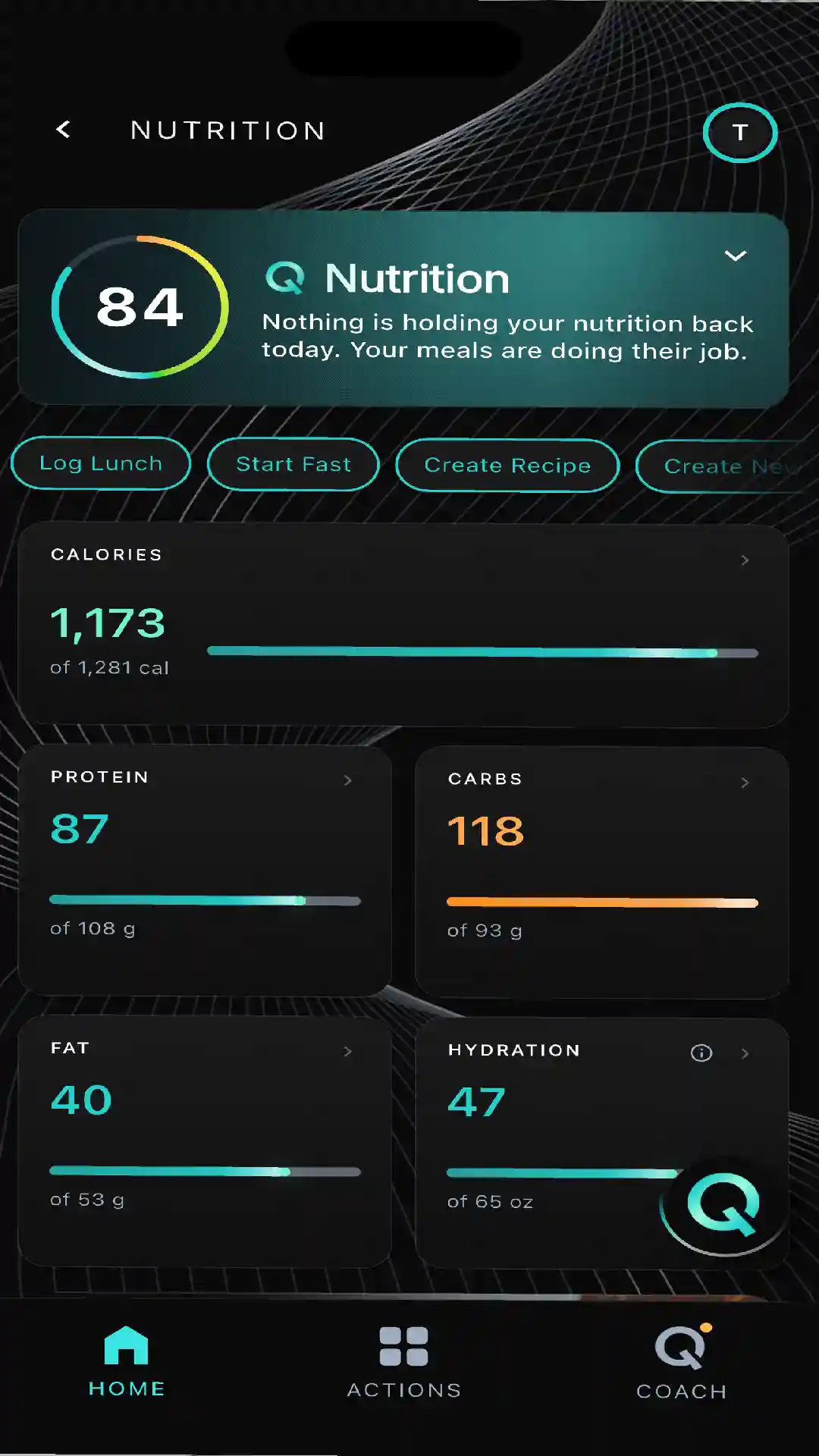
Balco created QBod as an AI-powered coaching app that brings nutrition, workouts, sleep, recovery and goals into one system. Coach Q draws on published studies, peer-reviewed research and established coaching methods, then applies that foundation to the user’s information and goals. A change in recovery can shape training guidance; a schedule disruption can produce a revised plan.
When AI is more than an add-on
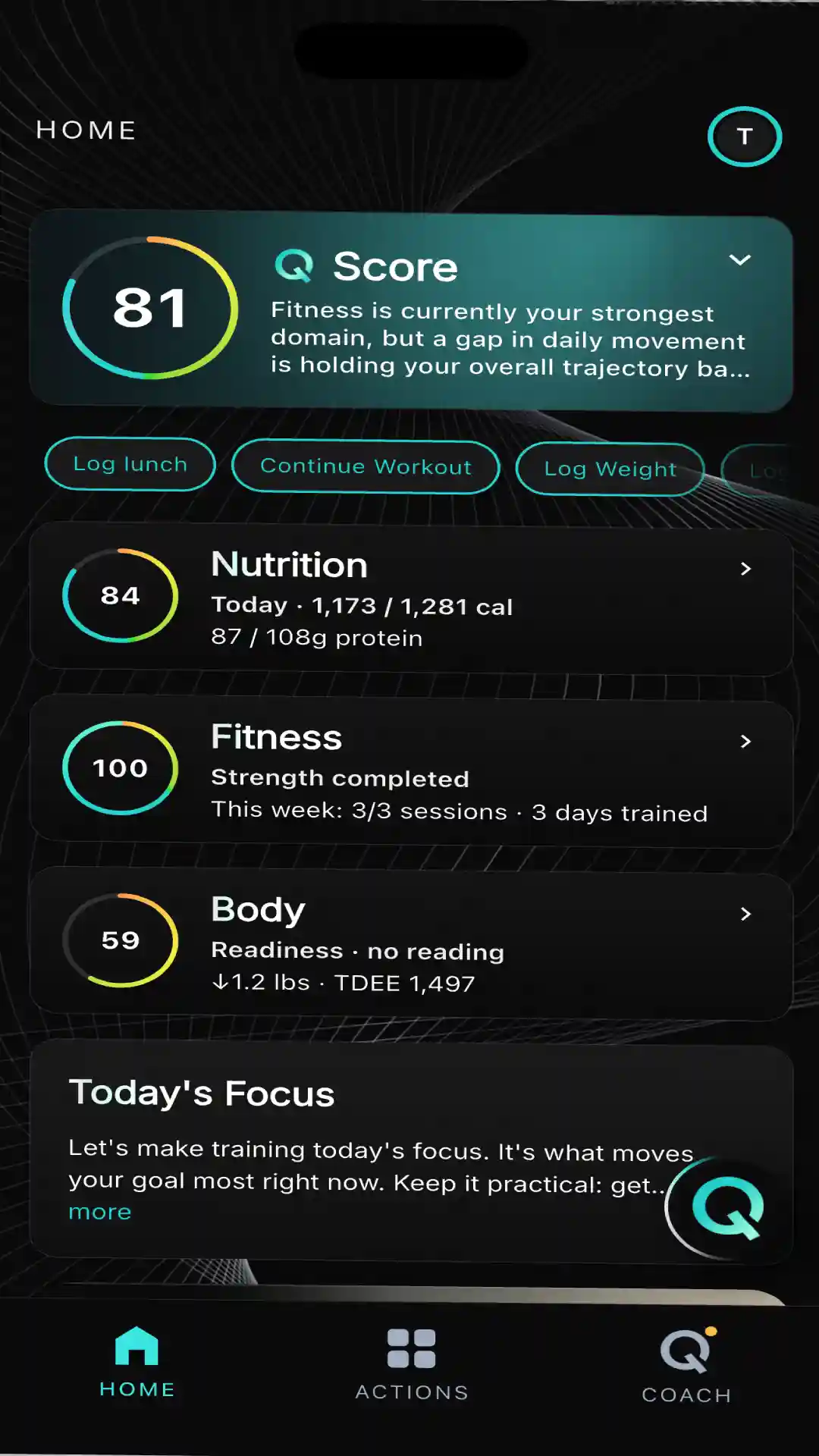
Many fitness apps were created to do one job well: log food, record workouts or monitor recovery. Adding AI may improve that function without connecting it to the rest of a person’s routine.
For consumers, the presence of an AI label may ultimately matter less than the role AI plays beneath the surface. The more useful question is whether it was added to perform another isolated task — or built into the product deeply enough to understand how the pieces fit together.
“People shouldn’t have to sort through multiple screens of data to understand what their bodies are telling them,” Balco said. “The future of fitness is not more data, but more useful guidance built around the individual.”