

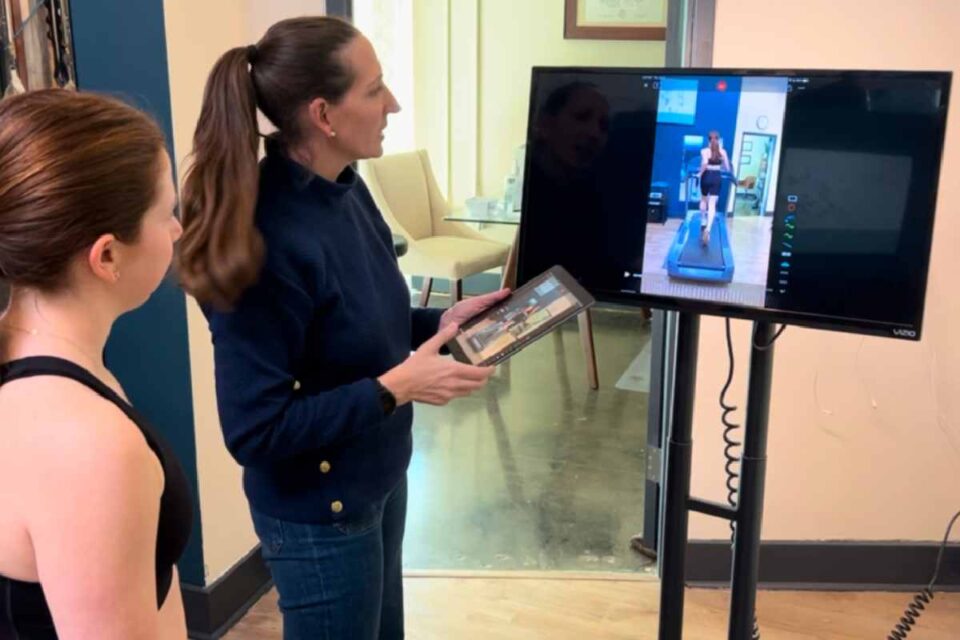
Imagine walking into a clinic holding a printout generated by ChatGPT. One of Kate Mihevc Edwards’s patients did exactly that: they had asked an AI platform to tell them which questions to ask, what symptoms to highlight, and even what outcome to expect. Edwards, a seasoned clinician and the founder of Precision Performance Running Medicine Clinic, dutifully went through the list because it was what the patient wanted. Then she set it aside.
“Tell me the story,” she said.
For Edwards, who also created the running medicine platform RunSource, this moment encapsulates the paradox of technology in health. Artificial intelligence (AI) can accelerate answers, but it also filters out the messiness of the little details that seem irrelevant but often hold the key to healing. “AI filters out emotion,” she says. “But the story is where the truth lives.”
Table of Contents
From Data to Direction
In sports and wellness, technology has become inescapable. Wearables count every step. Apps convert biometrics into dashboards. AI wellness bots promise to cut through the noise with customized plans. But for athletes and executives alike, the result often feels impersonal: numbers without context, optimization without empathy.
Edwards believes there’s another way. With RunSource V2, scheduled to launch this fall, she is weaving AI into the fabric of human-centered care. The platform builds on her years of clinical experience with runners, endurance athletes, and high-performing professionals. But this version uses AI not as a replacement for expertise, but as a vessel to carry it further.
“When I first envisioned RunSource, the technology to realize it didn’t exist,” Edwards says. “Now AI lets us actually build what I imagined.”
The Architecture of Empathy
RunSource V2 introduces two AI agents. The first is built from Edwards’s own clinical reasoning, painstakingly mapped into a system that mimics how she evaluates injuries. If someone enters “knee pain,” the agent doesn’t just assume the knee is the culprit. It asks a sequence of questions Edwards herself would ask: is the pain sharp or dull, does it worsen throughout the day, is it linked to movement patterns? By the end, the user receives a likely explanation, a pathway of videos from experts, and guidance on whether to seek medical imaging or professional care.
The second agent is a knowledge library distilled from over 500 research studies and expert resources that Edwards curated personally. If the system doesn’t know the answer, it doesn’t bluff. It says, “I don’t know,” and points users to where they can learn more. “That’s one of the safeguards,” Edwards explains. “AI always wants to give an answer. But in medicine, sometimes the safest thing you can say is: go see someone.”
Efficiency Meets Access
Beyond diagnosis-like reasoning, AI is also reshaping the pace of development. What used to take Edwards’s developer six months can now be done in two weeks. AI helps organize RunSource’s growing library of content, making it easier for users to find the right guidance at the right time.
The result is a layered ecosystem: the podcast as the broadest entry point, the app as an accessible first step, the clinic for hands-on care, and Edwards’s consulting as the most intimate option. “Not everyone can see me in person,” she says. “But with AI, people in small towns who would never have access to this level of care can still benefit from my way of thinking through problems.”
Why Story Still Matters
Edwards is quick to note that AI alone is not enough. In her clinic, what patients say (and don’t say) often matters more than any metric. A runner’s offhand comment about morning stiffness, or a parent’s subtle worry about their child’s eating habits, can reshape a treatment plan. “Storytelling is how people make sense of their bodies,” she says. “If we skip that, we miss the human part of healing.”
That’s why RunSource is designed to direct users back to human connection when needed. If someone repeatedly asks the same question, the app will eventually prompt them: it’s time to see a clinician. If patterns suggest a serious condition, the app doesn’t encourage self-reliance; it insists on professional evaluation.
Use Cases in Motion
Edwards imagines a traveling executive who relies on the app to maintain training while navigating jet lag and hotel treadmills. A collegiate runner away from their coach who receives personalized guidance that reflects not just performance goals but mental resilience and injury prevention. Parents of high school athletes who use the app to guide healthier conversations about rest, recovery, identity, and the importance of addressing injuries early. The app provides a safe starting point for those who aren’t ready to see a healthcare provider, while also helping them recognize when professional care is necessary.
The technology amplifies care by meeting people where they are – on their phones, between meetings, in small towns far from specialists. But it never forgets its role: a bridge, not a destination.
The Promise and the Fear
Skeptics worry that AI will erase the human element from medicine. Edwards frames it differently. “Only about 25 percent of runners seek healthcare when they’re injured,” she notes. “The rest already turn to Google or now to AI tools. My goal is to meet them where they are and guide them toward safer, smarter choices.”
By embedding clinical reasoning into AI, she hopes to transform technology from a blunt instrument into a listening tool as one that points people back to care rather than away from it.
The Future of Human-Centered AI
The mission of RunSource, distilled into one promise, is simple: continuous improvement rooted in empathy. “We’ll never be perfect,” Edwards says. “But we will always push to do better.”
Feedback is built directly into the app. Edwards and her team read every comment, sometimes reaching out personally. That responsiveness, she says, is part of what will keep RunSource grounded in the human experience.
Closing the Loop
In a health-tech landscape obsessed with speed and scale, Edwards is betting on something different: that the future of performance medicine lies not just in sharper algorithms but in deeper stories. RunSource V2 doesn’t erase the paradox of technology; it reframes it.
The innovation is not that AI can replicate human expertise, but that it can extend it, bringing care to people who would otherwise never experience it. In the end, Edwards insists, the heart of healing is not the answer an app gives you, but the connection it restores.
To learn more or download the RunSource app, visit: https://www.fastbananas.com/